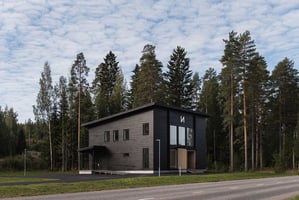

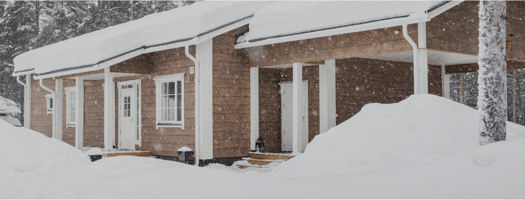
VISITING HONKA TRIBE MEMBERS In a snowy pine-forest setting in Lapland stands a classic beauty –...
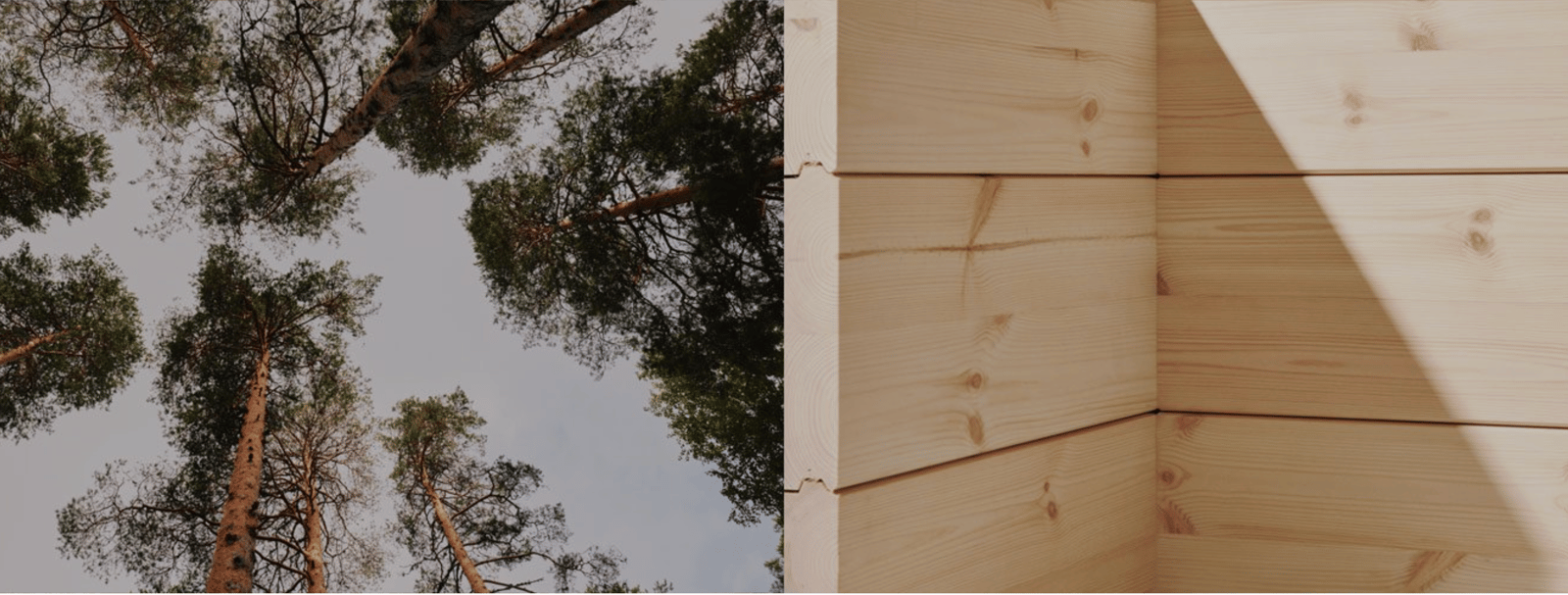
When building a log house, there are two great choices: traditional pine logs, or spruce logs, which are becoming increasingly popular. We asked experts to explain the difference between the two.
The short answer: as laminated logs, pine and spruce perform equally well. Pine has durable, naturally antibacterial heartwood and fewer, larger knots. Spruce is lighter in color and keeps its lightness longer. So the choice is mostly about looks, and with the new Honka Fusion log you don’t have to choose: a pine core for strength, spruce faces for the look.
Watch: our first Honka client, 20 years later.
The Sparks family home, and the son’s home on the same land. Watch the video
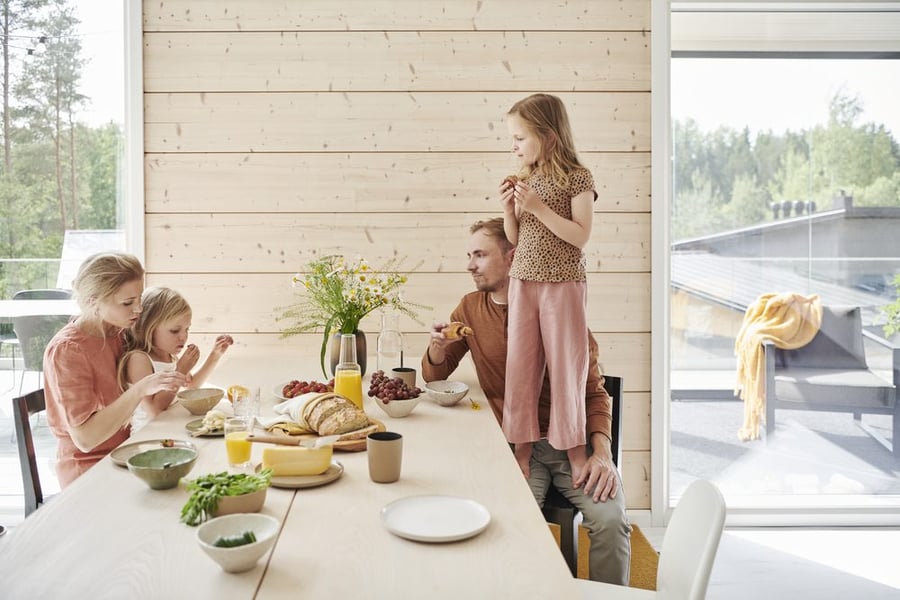
"Pine and spruce are the two most common tree species in Finland. Both grow well in nutrient-rich soil. Pine can withstand drought better, but there is very little difference in terms of growth."
Eino Hekali, product director
Pine logs are still favourite
Pine is the traditional choice for log houses, and still the number one preference. Back in the days when houses were built of round logs, pine was the obvious choice on account of its sturdiness and resistance to bending. Spruce is a trickier customer, since spruce logs are more prone to going out of shape.
“Today’s building materials have been developed further, with round logs having been replaced by rectangular lamellar logs. So thanks to technological advances, spruce has become a viable alternative alongside pine,” says Honka product director Eino Hekali.
Pine, unlike spruce, has dark and durable heartwood with a particularly high concentration of antibacterial substances.
“If only the heartwood was used for construction, pine would be better than spruce owing to its durability, as spruce has no heartwood. But because heartwood, as the name implies, is only in the centre of the log, pine and spruce are equally good.
There is no difference in their rate of growth either.
“Pine and spruce are the two most common tree species in Finland. Both grow well in nutrient-rich soil. Pine can withstand drought better, but there is very little difference in terms of growth.”
Differences in knot patterns
So if the quality or technical properties of pine and spruce logs are pretty much the same, which should you choose?
“It’s mostly a matter of looks,” says Hekali. The two types of wood have different knot patterns. Spruce has small knots, but there are more of them. Some people like this look. Pine has fewer knots, but they are bigger, which some people consider to create a calmer effect.
According to Honka’s Chief Architect Anne Mäkinen, the frequent, smaller knots and resin pockets may be the reason why pine is still the number one choice for many.
“If the wall facing south is a very dark tint, the surface temperature may rise to as high as 70 or even 90 °C. This extreme heat can cause resin to leak from the wood, but this can be avoided by choosing a lighter colour, so that the logs absorb less heat,” says Mäkinen.
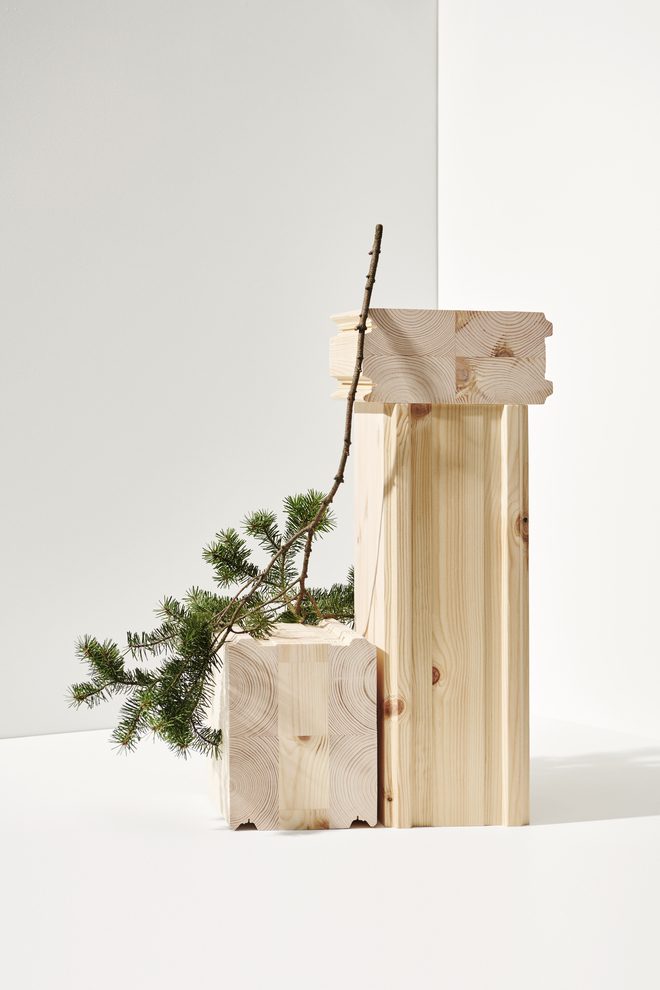
Spruce stays light
Spruce is lighter in colour than pine. Untreated spruce reacts less to ultraviolet light than pine.
“Pine becomes darker than spruce when exposed to light. Spruce may be a good choice if you want to keep the surface untreated. With the proper surface treatment, the colour changes can be minimised effectively.
Modern UV protection products that breathe better make the surface less dark, bringing the two types of wood closer to each other in terms of their properties,” says Hekali.
According to Mäkinen, interior design trends have changed in recent years, and quite dramatically so.
“Although as recently as a decade ago log walls were painted in translucent white, these days people go for more natural alternatives and prefer the log surface to remain visible. This may have contributed to the growing popularity of spruce, which also retains its lighter colour for longer than pine.”
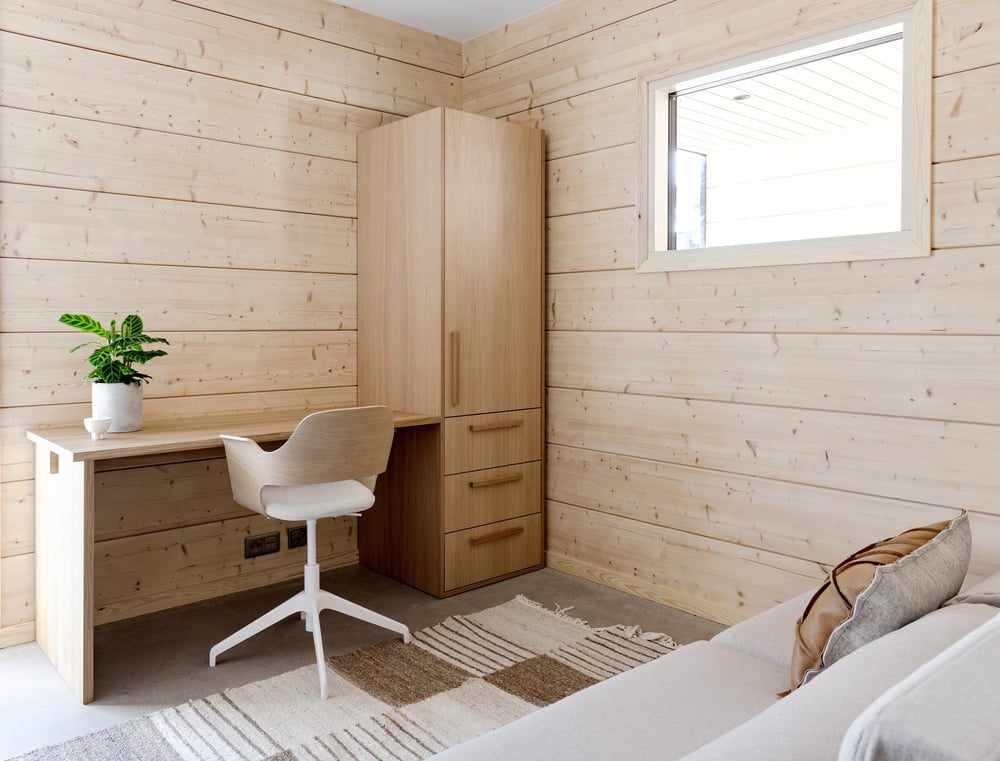
"Modern UV protection products that breathe better make the surface less dark, bringing the two types of wood closer to each other in terms of their properties."
Eino Hekali, product director
Watch: a Honka home arrives.
Every step of getting the log bundles out of the containers on site. Watch the video
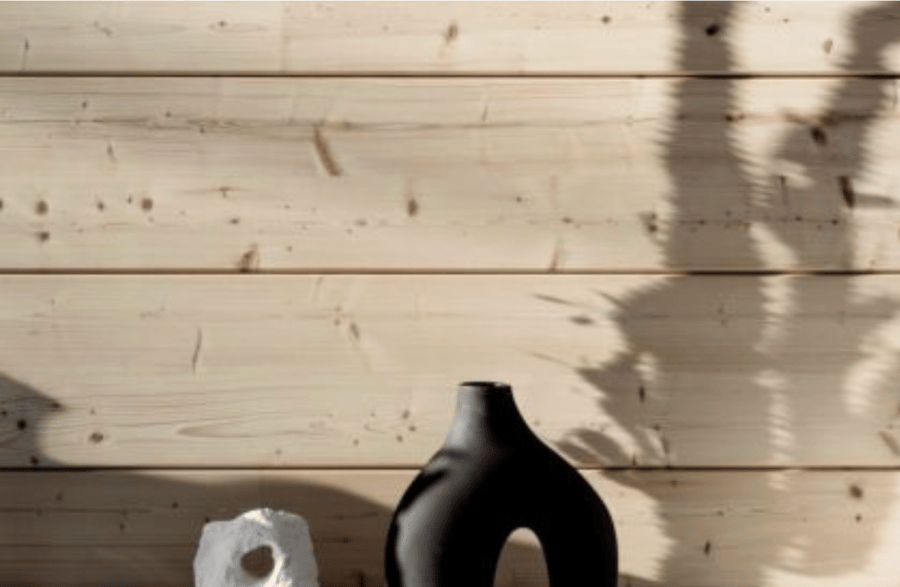
Which logs for your house: pine or spruce?
✔ Pine and spruce are both common trees that grow well.
✔ When made into lamellar logs, they have equally good properties.
✔ Pine is a naturally antibacterial material.
✔ Pine has durable heartwood.
✔ Spruce is lighter in colour.
✔ Spruce retains its lightness better than pine.
✔ Darkening can be prevented with surface treatment.
✔ Spruce has plenty of small knots.
✔ Pines has fewer but bigger knots.
Read: where the wood comes from.
Slow-grown Nordic Scots pine from managed, PEFC-certified Finnish forests. Read more
The Honka Fusion log ends the debate: you don’t have to choose
The pine-or-spruce question has a better answer than either one: use both, each where it does its best work. That is how the new Honka Fusion log is built. Its core is slow-grown Nordic Scots pine, with the grain running vertically: the pine carries the structure and makes the log non-settling. Its faces are spruce panels with the grain running horizontally, there purely for the look.
Honka USA sells only the spruce-faced version. Spruce bleeds far less resin than pine: once pine is stained and the sun warms the wall, resin is pushed out of its larger knots.
Further reading
Are glue-laminated log walls healthy? What is in the wall, and what it does to your indoor air.
Why Solid Timber: how a solid timber wall holds heat and humidity, and how it compares with rammed earth and ICF.
The Honka Process Timeline: all 20 steps, from your budget to raising day.